☀️ Kühle dein Gewächshaus - 5 % Rabatt auf Kits — CODE: WINTER5
How we think

Smart farming should adapt to farms - not the other way around.

GEIA was not built as a product first. It was built as an answer to patterns repeated across real farms: powerful technology becoming more expensive, more closed and harder to adapt.

Built for
real farms
GEIA
01Accessible
02Modular
03Open
04Community
05Inclusive
Five operating principles

A platform philosophy expressed as practical design decisions.

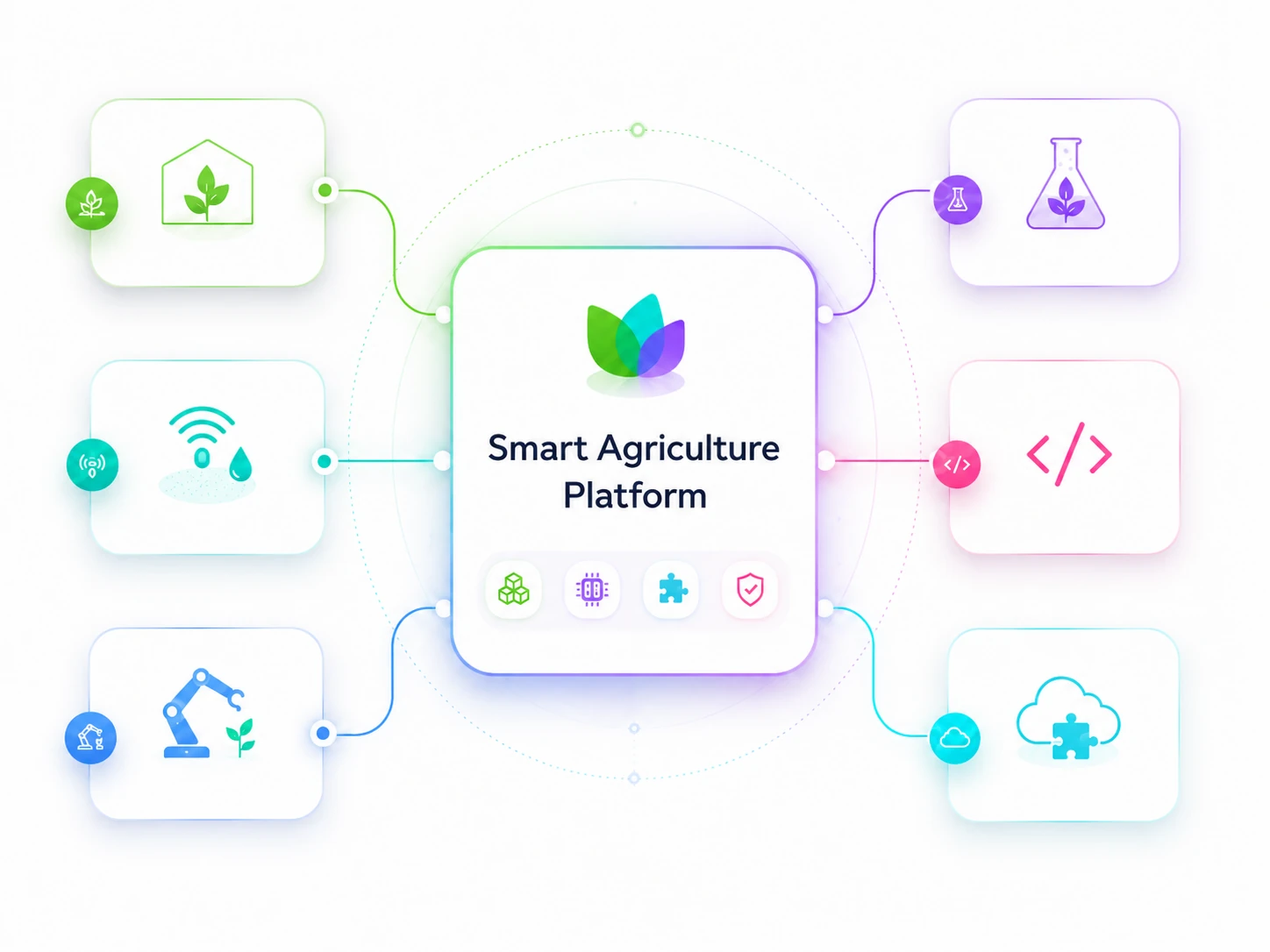
These principles determine how GEIA is priced, deployed, connected and extended. They are not decorative statements; they shape the architecture.

Each one answers a simple question: what must be true for smart-farming technology to remain useful outside an ideal demonstration?

01
Accessibility before optimization

Technology only matters if people can actually use it.

Automation and data cannot improve agriculture when the cost, complexity or dependencies prevent adoption. GEIA lets growers begin with one useful problem, learn gradually and expand when it makes sense.

  • Affordable starting points
  • Simple, gradual deployment
  • No forced infrastructure dependency
Design consequenceStart small. Keep what works. Expand without replacement.
02
Modular systems reflect real farms

Farms evolve one zone, tank and experiment at a time.

Real farms do not grow in perfect rectangles or according to a fixed product diagram. GEIA organizes automation around logical zones, so expansion happens by adding useful modules rather than replacing the system.

  • One logical zone at a time
  • Different hardware where needed
  • Independent experiments that can later connect
Design consequenceThe architecture follows the farm, not the vendor’s bundle.
03
Open by platform design

Openness is an architectural decision, not a marketing slogan.

GEIA uses standard interfaces and integration paths so growers and builders can adapt systems to local realities. Openness reduces lock-in, supports experimentation and makes infrastructure more resilient over time.

  • Use GEIA hardware or compatible hardware
  • Connect through standard APIs and MQTT
  • Run locally, in the cloud or at the edge
See the platform architecture
Design consequenceYour farm data and operating choices should not depend on one closed box.
04
Community as a force multiplier

No single company understands every farm.

Agriculture is deeply local: climates, crops, methods and constraints differ. GEIA becomes more useful when growers, builders, laboratories and partners contribute knowledge, tools and integrations.

  • Growers contribute real operating context
  • Builders extend tools and hardware
  • Experts turn data into better decisions
Explore the ecosystem
Design consequenceShared infrastructure; many independent ways to improve it.
05
Scale through inclusion

Meaningful impact requires reach, not exclusivity.

Smart-farming technology must work for small growers, remote locations and constrained environments as well as sophisticated operations. Accessibility is not a compromise; it is a prerequisite for better data and wider impact.

  • Small and mid-sized operations
  • Remote and unreliable-connectivity environments
  • Different budgets and levels of technical experience
Design consequenceBetter participation creates better data, better tools and smarter automation.
The future of farming

Not simply bigger. Smarter, closer and more resilient.

Some controlled-environment agriculture pursued scale through capital, artificial light and complexity. That model can be useful, but it should not be treated as the only future.

Decentralized systems

Smaller and mid-sized farms can adapt faster, reduce transport and remain useful when global systems are disrupted.

Technology close to food production

Sunlight-first

For most crops, sunlight remains the most efficient energy source. Artificial light is valuable when targeted, not automatically as the default.

Nature supported by precise technology

Efficiency is impact

Water, nutrients, energy and labour should be measured. Sustainability becomes meaningful when improvement is visible in operating data.

Outcomes that can be compared
MessenUnderstandAdjustUse less, achieve more
Closing thought
GEIA is not built to optimize a single perfect farm. It is built to support many real ones.

Engineers and farmers working together, so smart farming can grow everywhere.

Start typing and press Enter to search

Shopping Cart

Es befinden sich keine Produkte im Warenkorb.

de_DE